
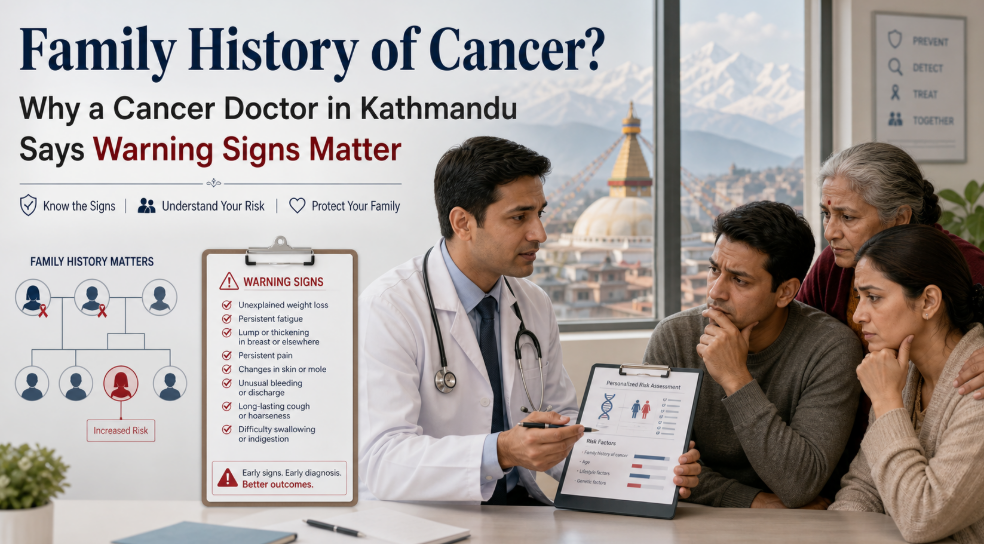
If cancer runs in your family, it does not always mean you will develop cancer. But it does mean you should pay closer attention to warning signs, screening, and medical advice. A cancer doctor in Kathmandu can help assess whether your family history increases your risk and whether you need earlier or more frequent check-ups.
Many cancers are easier to manage when detected early. The goal is not to panic, but to understand your personal risk, notice unusual body changes, and seek timely medical guidance.
Cancer is a growing health concern in Nepal. GLOBOCAN 2022 estimated 22,008 new cancer cases and 14,704 cancer-related deaths in Nepal, with lung, breast, cervical, stomach, and colorectal cancers among the most frequently reported cancers.
Why Does Family History Matter in Cancer Risk?
Family history matters because some cancers can be linked to inherited gene changes, shared lifestyle factors, or common environmental exposures.
According to the U.S. National Cancer Institute, about 5%–10% of all cancers are thought to be caused by harmful inherited genetic changes passed down from a parent.
That also means most cancers are not directly inherited. A person may still develop cancer without any family history. Similarly, someone with a family history may never develop cancer.
The important point is this: family history helps doctors decide whether you need closer monitoring, genetic counseling, or screening earlier than the general population.
When Should You Talk to a Cancer Doctor in Kathmandu About Family History?
You should consider speaking with a cancer doctor in Kathmandu if one or more close relatives have had cancer, especially at a younger age.
A “close relative” usually means a parent, sibling, child, grandparent, aunt, uncle, or cousin. The risk may be more significant when cancer appears across generations or when the same type of cancer occurs in several relatives.
The CDC notes that family health history can help doctors decide what cancer screening tests are needed, when screening should start, and whether genetic counseling may be useful.
Family History Patterns That Need Medical Attention
| Family history pattern | Why it matters |
| Cancer diagnosed before age 50 | May suggest inherited risk in some cancers |
| Multiple relatives with the same cancer | May indicate a family pattern |
| Breast and ovarian cancer in the family | May suggest hereditary breast and ovarian cancer syndrome |
| Colon and uterine cancer in the family | May suggest Lynch syndrome |
| Cancer in both paired organs, such as both breasts | May need specialist risk assessment |
| Rare cancers, such as male breast cancer | Often needs further evaluation |
| A known inherited cancer gene in the family | Blood relatives may also need counseling |
The National Cancer Institute recommends considering genetic counseling or testing when family patterns suggest hereditary cancer risk, such as multiple close relatives with similar cancers, young-age diagnosis, or rare cancer types.
What Are the Cancer Warning Signs You Should Not Ignore?
Cancer warning signs are not always dramatic. Many early symptoms can look like common health problems. But symptoms that are persistent, unexplained, worsening, or unusual for your body should be checked.
The National Cancer Institute lists symptoms such as breast changes, bladder changes, unexplained bleeding, bowel changes, persistent cough, eating problems, fatigue, fever, night sweats, and mouth changes as possible cancer-related warning signs.
Common Warning Signs to Discuss With an Oncologist
| Warning sign | What it may look like |
| Unexplained weight loss | Losing weight without diet, exercise, or illness |
| A new lump or swelling | Lump in breast, neck, armpit, abdomen, groin, or testicle |
| Unusual bleeding | Blood in stool, urine, cough, vomit, or abnormal vaginal bleeding |
| Persistent cough or hoarseness | Cough or voice change that does not improve |
| Change in bowel habits | Ongoing diarrhea, constipation, narrow stool, or blood in stool |
| Change in urination | Blood in urine, pain, difficulty, or frequent urination |
| Non-healing wound or mouth ulcer | Sore that does not heal after several weeks |
| Difficulty swallowing | Food feels stuck, painful swallowing, or persistent indigestion |
| Skin or mole changes | Change in size, shape, color, bleeding, or itching |
| Long-lasting fatigue | Severe tiredness that does not improve with rest |
Having one symptom does not mean you have cancer. But ignoring symptoms because “it may be nothing” can delay diagnosis.
Why Early Detection Matters for Cancer Treatment in Nepal
Early detection can reduce delays in diagnosis and treatment. The World Health Organization explains that cancer mortality can be reduced when cases are detected and treated early. Early diagnosis focuses on recognizing symptoms promptly, while screening looks for cancer before symptoms appear.
This is especially important for people with a family history of cancer.
For example, someone with a strong family history of colorectal cancer may need screening earlier than someone with average risk. A woman with a strong family history of breast or ovarian cancer may need a personalized breast screening plan.
In Nepal, lung cancer, breast cancer, cervical cancer, stomach cancer, and colorectal cancer are among the most common cancers reported by GLOBOCAN 2022.
That makes awareness, timely consultation, and appropriate screening important parts of cancer prevention and early care.
Does Family History Mean You Need Genetic Testing?
Not always.
Genetic testing is useful for some people, but it is not needed for everyone with a family history of cancer. A doctor or genetic counselor usually reviews your personal history, family history, cancer types, and age at diagnosis before recommending testing.
The National Cancer Institute explains that genetic testing for inherited cancer risk is usually done using blood, saliva, cheek cells, or other tissue samples, and it looks for inherited gene changes that may increase cancer risk.
Genetic Testing vs Tumor Testing
| Type of test | Purpose | Who may need it |
| Genetic testing for inherited risk | Looks for inherited gene changes passed through family | People with strong family cancer patterns |
| Tumor genetic testing | Looks for changes in cancer cells that may guide treatment | Some patients already diagnosed with cancer |
These are not the same test. Tumor testing may guide treatment, while inherited genetic testing helps assess family-related risk.
Which Cancers Are More Often Linked With Family History?
Some cancers have stronger known links with hereditary risk than others. This does not mean every case is inherited, but family history can be especially relevant.
Cancers Where Family History May Be Important
| Cancer type | Family history clues |
| Breast cancer | Multiple relatives, young age, both breasts, ovarian cancer in family |
| Ovarian cancer | Any close family history may need specialist review |
| Colorectal cancer | Colon cancer before 50, multiple relatives, uterine cancer in family |
| Prostate cancer | Strong family history, advanced prostate cancer in relatives |
| Pancreatic cancer | Multiple relatives or known inherited gene changes |
| Uterine cancer | May be linked with Lynch syndrome in some families |
| Stomach cancer | Multiple close relatives or early diagnosis |
| Thyroid cancer | Some rare hereditary forms exist |
The CDC highlights hereditary breast and ovarian cancer syndrome and Lynch syndrome as two hereditary conditions that can raise the risk of certain cancers.
How to Prepare Your Family Cancer History Before Seeing an Oncologist

Before visiting a cancer specialist in Kathmandu, write down as much information as possible. You do not need perfect records. Even approximate details can help.
Try to collect:
- Which relatives had cancer
- What type of cancer they had
- Age at diagnosis
- Whether cancer occurred in both paired organs
- Whether anyone had more than one cancer
- Whether any genetic test was done
- Whether relatives smoked, used tobacco, or had other known risk factors
- Whether treatment reports are available
This helps the oncologist understand whether the pattern looks hereditary, lifestyle-related, environmental, or unclear.
A helpful approach is to create a simple three-generation family tree: grandparents, parents/aunts/uncles, siblings/cousins, and children.
What Will an Oncologist Ask During a Cancer Risk Consultation?
An oncologist will usually ask about your symptoms, medical history, family history, lifestyle factors, previous screening, and any reports you already have.
The consultation may include:
A physical examination, depending on your symptoms.
Review of previous lab tests, biopsy reports, scans, or treatment records.
Discussion of whether your symptoms need urgent investigation.
Recommendation for screening tests based on age, sex, symptoms, and risk level.
Referral for genetic counseling or testing if your family history suggests inherited cancer risk.
A good consultation should not create fear. It should help you understand your risk and make a practical next-step plan.
Warning Signs by Cancer Type: What Patients Commonly Search For
Breast Cancer Warning Signs
Breast cancer warning signs may include a new lump, nipple discharge, breast skin dimpling, nipple pulling inward, swelling, redness, or a change in breast size or shape.
Breast changes should be checked, even in younger women, especially if there is a family history of breast or ovarian cancer.
Lung Cancer Warning Signs
Lung cancer may cause a persistent cough, coughing blood, chest discomfort, shortness of breath, hoarseness, weight loss, or repeated chest infections.
In Nepal, lung cancer was the most common cancer overall in GLOBOCAN 2022 estimates.
Cervical Cancer Warning Signs
Cervical cancer may cause abnormal vaginal bleeding, bleeding after intercourse, unusual discharge, pelvic pain, or bleeding after menopause.
Cervical cancer is one of the most common cancers among women in Nepal, making screening and HPV-related prevention especially important. GLOBOCAN 2022 reported cervical cancer as the third most common cancer overall in Nepal and the second most common among females.
Colorectal Cancer Warning Signs
Colorectal cancer may cause blood in stool, change in bowel habits, unexplained anemia, abdominal pain, or unexplained weight loss.
A family history of colon cancer before age 50 needs medical attention.
Stomach Cancer Warning Signs
Stomach cancer may cause persistent indigestion, abdominal pain, feeling full quickly, vomiting, black stool, anemia, or unexplained weight loss.
Because these symptoms can overlap with common stomach problems, persistence matters.
When Is It Urgent to See a Cancer Specialist in Kathmandu?
Seek prompt medical care if you notice symptoms that are severe, persistent, or unexplained.
You should not wait for months if you have:
Unexplained bleeding.
A growing lump.
Blood in stool or urine.
Coughing blood.
A breast lump or nipple changes.
Difficulty swallowing that continues.
Unexplained weight loss.
Persistent pain with no clear cause.
A non-healing ulcer or wound.
Symptoms plus a strong family history of cancer.
These symptoms may have non-cancer causes, but they should still be evaluated.
Cancer Treatment in Nepal: Why Diagnosis Comes Before Treatment
Patients often search for cancer treatment in Nepal before they have a confirmed diagnosis. But cancer treatment should begin only after proper evaluation.
A diagnosis may require blood tests, imaging, endoscopy, biopsy, pathology review, and staging. Treatment decisions depend on the cancer type, stage, overall health, and patient preference.
Common cancer treatment options may include surgery, chemotherapy, radiation therapy, targeted therapy, immunotherapy, hormone therapy, or palliative care. Not every patient needs every treatment.
A medical oncologist helps coordinate treatment planning, especially for chemotherapy, targeted therapy, immunotherapy, and systemic cancer care.
Dr. Sudip Shrestha’s Profile
Dr. Sudip Shrestha is publicly listed as an MD, Founder and Executive Chairman, and Senior Consultant Medical Oncologist at Nepal Cancer Hospital & Research Center. His website also lists his MBBS from JIPMER, MD in Internal Medicine from Tribhuvan University, and post-graduate medical oncology training from Rajiv Gandhi Cancer Institute & Research Centre, Delhi.
This blog should be medically reviewed before publication to ensure it reflects current clinical practice and local patient pathways.
Practical Steps If Cancer Runs in Your Family
Start by documenting your family history. Do not rely only on memory.
Next, talk to a qualified doctor about your risk. You may not need advanced testing. You may only need routine screening at the right time.
Do not ignore symptoms because you are afraid of the result. Delayed diagnosis can reduce treatment options.
Avoid self-diagnosis through online searches. Search can help you learn, but it cannot examine you, review reports, or decide your risk.
Bring your reports to the appointment. Old biopsy reports, discharge summaries, scan films, and lab results can save time.
Ask direct questions: What is my risk? Do I need screening? Do I need genetic counseling? What symptoms should I watch for? When should I follow up?
Direct Answer: What Should I Do If My Parent Had Cancer?
If your parents had cancer, you should note the type of cancer and age at diagnosis, then discuss it with a doctor. One cancer in one older relative may not mean high inherited risk. But cancer at a young age, multiple affected relatives, rare cancers, or breast, ovarian, colon, pancreatic, or prostate cancer patterns may need closer assessment.
A cancer doctor in Kathmandu can guide whether you need screening now, later, or more frequently than average-risk people.
FAQs About Family History and Cancer Warning Signs
1. Does family history mean I will definitely get cancer?
No. Family history can increase risk in some cases, but it does not guarantee cancer. Many people with family history never develop cancer, and many people with cancer have no known family history.
2. When should I consult a cancer doctor in Kathmandu?
Consult a cancer doctor if you have persistent warning signs, a strong family history, cancer before age 50 in relatives, multiple relatives with the same cancer, or a known inherited cancer gene in the family.
3. What are the most important cancer warning signs?
Important warning signs include unexplained weight loss, a new lump, unusual bleeding, persistent cough, change in bowel or bladder habits, difficulty swallowing, non-healing wounds, and unexplained fatigue.
4. Is genetic testing available for every cancer?
No. Genetic testing is recommended only when personal or family history suggests inherited cancer risk. A doctor or genetic counselor should help decide whether testing is appropriate.
5. What cancers are common in Nepal?
GLOBOCAN 2022 estimated lung, breast, cervical, stomach, and colorectal cancers among the top five cancers in Nepal.
6. Can cancer be found before symptoms appear?
Yes, some cancers can be detected through screening before symptoms appear. Screening depends on age, sex, risk factors, and family history.
7. Should I wait if symptoms are mild?
If symptoms are mild but persistent, unexplained, or worsening, do not wait too long. Early evaluation can help identify the cause and reduce delay.
8. Is every lump cancer?
No. Many lumps are benign. But a new, growing, hard, painless, or persistent lump should be examined by a doctor.
9. Can lifestyle reduce cancer risk even with family history?
Yes. Healthy habits, avoiding tobacco, maintaining a healthy weight, vaccination where appropriate, screening, and timely medical care can help reduce or manage cancer risk.
10. Who is Dr. Sudip Shrestha?
Dr. Sudip Shrestha is a Senior Consultant Medical Oncologist and Founder & Executive Chairman at Nepal Cancer Hospital & Research Center, according to his official website.
Conclusion
A family history of cancer is not a reason to panic. It is a reason to be informed.
Knowing your family history helps doctors decide whether you need earlier screening, genetic counseling, or closer follow-up. Warning signs such as unexplained weight loss, unusual bleeding, persistent lumps, long-lasting cough, and bowel or bladder changes should not be ignored.
If you are worried about symptoms or family risk, speaking with a cancer doctor in Kathmandu can help you understand what matters, what does not, and what steps to take next.
Author Bio
Dr. Sudip Shrestha, MD is a Senior Consultant Medical Oncologist and Founder & Executive Chairman at Nepal Cancer Hospital & Research Center. His public profile lists medical training in MBBS, MD Internal Medicine, and post-graduate medical oncology, with long-standing involvement in cancer care in Nepal.Medical note: This article is for patient education only. It should not replace consultation, diagnosis, or treatment from a qualified doctor.